Data Warehouse & Management Software
Secure & Automated Data Extraction, Transformation, Management, & Analysis
- Data Accuracy – Consistent data validation rules throughout the data pipeline minimize inconsistencies that can plague manual processes.
- User Independence – User-friendly interfaces and self-service analytics tools empower business users to access and analyze data independently.
- Ease & Efficiency – Automating tasks like data extraction, transformation, loading (ETL), and data cleansing allows for faster data delivery.


We Connect to 200+ ERPs/EPMs












insightsoftware Data Warehouse Solutions

Operational Reporting for Oracle EBS and OCA
Angles Enterprise for Oracle unlocks powerful insights in your chosen BI tool. 1,800 pre-built, no-code business reports deliver actionable insights.

Data Warehouse Automation for Microsoft Dynamics
Jet Analytics is a complete data preparation, automation, and modeling solution. It’s five times faster than hand coded solutions.

Business Intelligence & Analytics
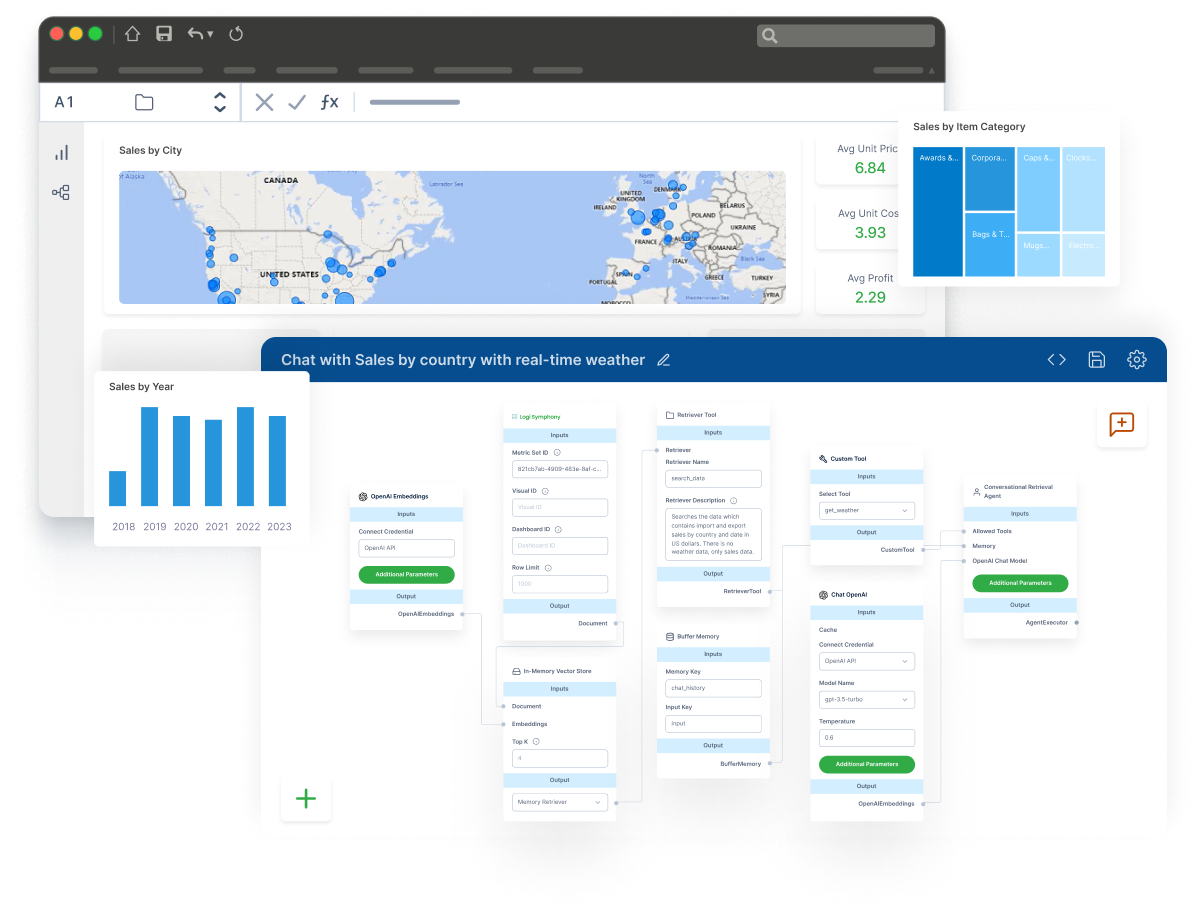
Logi Symphony is modern BI software that allows software vendors and enterprises to augment any application with AI-infused analytics
Advanced Analytics and Write-Back for Power BI
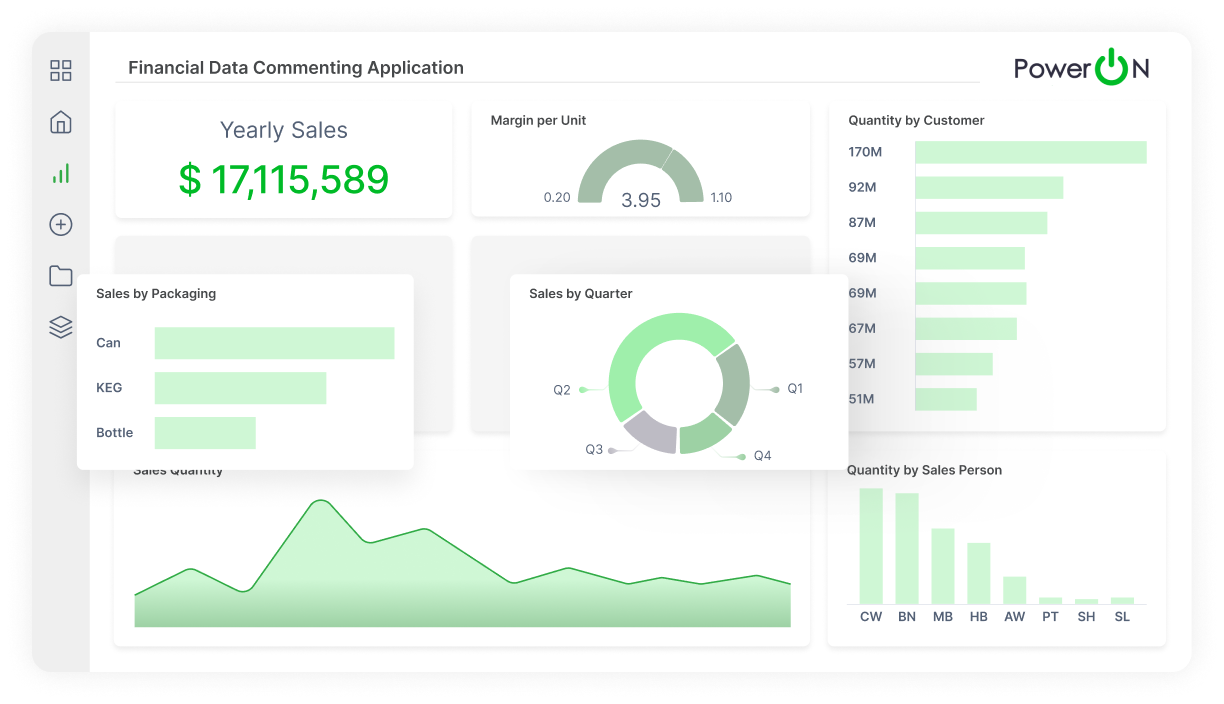
Power ON supercharges Power BI with Excel-like functionality, write-back, and a complete budgeting and planning solution that breaks down silos.
Data Connectivity
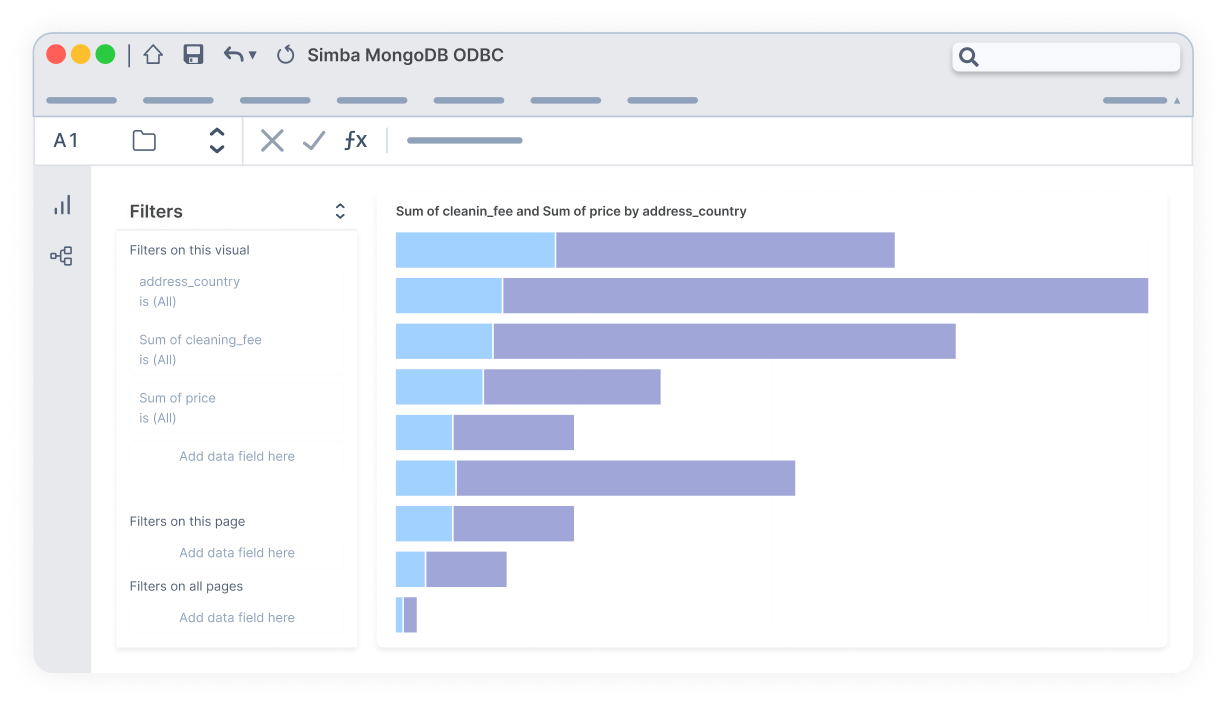
Simba boosts BI and ETL with advanced drivers and an SDK offering seamless data integration, deeper real-time insights, and efficient cloud migration.

Advanced Analytics and Write-Back for Qlik
Vizlib unleashes the full power of Qlik Sense and Qlik Cloud with advanced visualization functionality and write-back for effective data-driven decisions.
Tired of Endless Data Wrangling & Distrust in Your Data? Our Data Management & Warehouse Platforms Can Help

Hand-Coded Data Warehouse Projects
The average data warehouse implementation takes 17 months, requiring extensive development and internal resource allocation. This kind of timeline ties up your IT and analytics teams instead of focusing on value-generating work. Jet Analytics helps remove those tedious manual development processes, reallocating capacity to other high-impact projects. Pre-built connectors, drag-and-drop data warehouse automation, and more make Jet Analytics a leading solution to bolster time-to-value and shift resources toward business insights.
Unscalable Reporting & BI Environment
Having multiple, disparate, disconnected data sources in a decentralized environment makes it difficult and unpredictable for business users to get the business data they need for reports and BI. Instead of waiting on IT, using inconsistent spreadsheets, and building “shadow BI” outside of governance, Jet Analytics makes their lives easier. It serves as a single, unified data warehouse and semantic layer, consolidating ERP, CRM, and other data sources into one governed platform. As a result, Jet Analytics makes your BI environment more scalable, reliable, and user-friendly.

Data Integrity & Consistency Issues
Manual data entry and manipulation are prone to errors, which lead to inconsistencies and inaccuracies across different systems. This unreliable data hinders effective analysis, generates misleading downstream reports, and ultimately undermines data-driven decision-making. Jet Analytics automates the ETL process, efficiently standardizing and moving source system data into governed models and pre-built cubes. The decisions you make are only as good as the underlying data, and Jet Analytics bolsters that foundation of trusted, repeatable data integrity.
Automate Your Data Management Strategy & Processes With insightsoftware
Democratize Your Data: Low-Code Data Management
Unlock the power of your data and empower everyone to make data-driven decisions. Jet Analytics’ low-code data warehousing solution breaks down technical barriers, eliminating the need for business users to rely on IT for basic reporting and BI needs. Its intuitive interface allows users with minimal technical expertise to access, explore, and visualize data independently. This is paired with a simple-to-use, drag-and-drop interface that automates SQL code for you, eliminating the need for cumbersome IT projects to cleanse, transform, and structure data for use with your BI tools.
Get Instant DemoImprovement in decision-making speed
Reduction in time spent consolidating data
More likely to outperform competitors

From Data to Decisions: Drive Business Insights
Uncover the hidden gems within your data and transform them into actionable insights that propel your business forward. Jet Analytics goes beyond simply storing information. By centralizing data from disparate sources and automating tasks like data cleansing and transformation, it empowers you to unlock the true potential of your data. Powerful data warehousing and analytics tools make it easier to analyze data from any angle, identify trends and patterns. This facilitates a deeper understanding of customer behavior, market dynamics, and operational performance for an advantage over your competitors.
Get Instant DemoImprovement in decision-making speed
Reduction in time spent consolidating data
More likely to outperform competitors

Scale Without Limits: Flexible Solutions for Evolving Needs
Don’t let limited storage or rigid structures hold you back. Today’s data landscape demands solutions that scale effortlessly. Jet Analytics’ data warehouse tools are built for flexibility to accommodate your growing data volumes without sacrificing performance. This ensures you have the power to handle the influx of information from new sources with ease, reducing demand on your IT teams. Furthermore, its flexible architecture allows you to integrate new data sources or easily upgrade to new cloud-based ERPs, ensuring your data remains a powerful asset for years to come.
Get Instant DemoImprovement in decision-making speed
Reduction in time spent consolidating data
More likely to outperform competitors

Leverage a Data Warehouse Platform Like Jet Analytics
A data warehouse can facilitate a much faster and easier data migration process and can make it possible to transition seamlessly to new software without redesigning hundreds of reports in the new system. Download your copy of the guide to learn more today.

Data Warehouse & Management FAQs
The answer to this will depend on your specific needs, budget, team size, etc., but we recommend looking at top-rated data management platforms like Jet Analytics and Simba. For example, Jet Analytics is rated 4.5 out of 5 on G2 and 4.3 out of 5 on Gartner. Simba is also rated highly, with another 4.5 out of 5 on G2 and 5.0 out of 5 on Gartner.
The core truth is that ERPs are designed to process transactions (capturing orders, invoices, shipments, etc.) with normalized schema that is optimized for inserts and updates. This is not ideal for complex ad-hoc analysis like reporting, forecasting, multidimensional queries, and more. ERPs simply can’t handle the complexity of data management and analysis like data warehouses can — and using them both means that you can better serve BI, reporting, and more without impacting the ERP itself.
A data warehouse is a centralized repository specifically designed to store historical data from various sources within an organization. It’s optimized for analysis and reporting, unlike a database, which is primarily for transactional processing. Data warehouses typically store aggregated and transformed data, while databases hold current, detailed records for day-to-day operations.
Data warehouse automation empowers businesses to transform raw data into strategic insights. By centralizing historical information from various sources, they enable businesses to analyze trends, track performance metrics, and identify areas for improvement. This data-driven approach allows for better decision-making, improved operational efficiency, and a stronger competitive advantage.
Data warehouses can benefit businesses of all sizes. Even smaller companies can generate valuable insights from historical sales data, customer interactions, or website traffic. Scalable data warehouse solutions are available to cater to the specific needs of growing businesses.
Data quality issues are a common challenge, so ensuring clean and consistent data across various sources is crucial for a successful data warehouse setup. Additionally, defining clear business requirements and selecting the right data warehouse solution for your specific needs are important initial steps.
By providing a central repository of historical data, a data warehouse empowers businesses to conduct in-depth analyses, identify trends, and generate more insightful reports. This data-driven approach allows for better decision-making across all departments.