Four Best Practices for Cash Account and Petty Cash Reconciliation


Petty cash reconciliation is a crucial process in maintaining the accuracy of financial records within an organization. By regularly reconciling the petty cash fund, companies can ensure that all disbursements are properly accounted for, reducing the risk of discrepancies and maintaining control over small, day-to-day expenses.
Most businesses have to grapple with petty cash, but few give much attention to it. As a result, it often turns into a quagmire of receipts, handwritten notes, and cryptic ledger entries that someone in the accounting department must attempt to decipher after the fact. Theft from the petty cash box is common in many organizations, and, in some organizations, it is a routine practice for an owner or office manager to borrow money from petty cash, often forgetting to pay it back.

Ostensibly, the whole purpose of having a petty cash system in the first place is to facilitate small payments and make life easier for office staff when they need to pay for relatively inexpensive items. In most cases, it has the contradictory result of making life much harder down the road, simply deferring the work of accounting and cash reconciliation to a later date.
Unfortunately, the burden of reconciliation typically falls on members of the finance department, who must make sense of the often incomplete records left behind by someone on the office staff who was simply in too much of a hurry to look after all the details properly.
This problem can occur with other cash account reconciliations as well. This is particularly true in cases where owners or office managers routinely perform cash withdrawals from a local bank account, or maintain a stock of checks from which they can issue that much-needed vendor payment, usually to cover an “emergency” situation. If employees don’t make payments with an eye to detailed record-keeping, cash account reconciliation can quickly turn into a complicated puzzle.
What Is a Petty Cash Reconciliation
A petty cash reconciliation is the process of verifying that the cash available in the petty cash fund matches the transactions recorded. This process involves comparing the remaining cash with the receipts and vouchers that document the withdrawals made from the petty cash fund. The goal is to ensure that every dollar spent is accounted for, preventing errors and identifying any discrepancies that may indicate fraud or misuse of funds.
How Petty Cash Reconciliation Work
Petty cash reconciliation involves several key steps. First, the actual cash on hand is counted to establish the starting point for reconciliation. Next, all receipts and vouchers related to petty cash transactions are reviewed and totaled. The total of the receipts and vouchers is then compared to the remaining cash in the fund. If these amounts do not match, the discrepancy must be investigated. This process ensures that all petty cash transactions are accurately recorded and that the cash balance is correct.
- Cash Count: Begin by physically counting the cash in the petty cash box.
- Receipt and Voucher Verification: Review all documents to ensure they match the transactions.
- Reconciliation Report: Create a detailed report of the findings, highlighting any discrepancies.
Key Components of Petty Cash Reconciliation
The reconciliation process consists of several key components that ensure its accuracy and effectiveness:
- Cash Count: This is the process of counting the actual cash in the petty cash fund. It provides the basis for the reconciliation and is critical for verifying the accuracy of the recorded transactions.
- Receipt and Voucher Summarization: All receipts and vouchers associated with petty cash transactions are reviewed and totaled. This step ensures that every transaction has been properly documented and approved.
- Reconciliation Statement: The results of the reconciliation are documented in a statement that compares the cash count to the receipts and vouchers. This statement is essential for identifying any discrepancies and ensuring that the petty cash fund is accurate.
Benefits of Petty Cash Reconciliation
There are several benefits to conducting regular petty cash reconciliations:
- Accuracy in Financial Records: Regular reconciliation ensures that all petty cash transactions are accurately recorded, which helps maintain the integrity of financial statements.
- Fraud Prevention: By regularly reviewing petty cash transactions, organizations can detect and prevent potential fraud or misuse of funds early.
- Improved Financial Control: Reconciliation helps maintain control over small expenses, ensuring that they are necessary and have been properly authorized.
- Transparency and Accountability: Regular reconciliations promote transparency and accountability within the organization, as all transactions are thoroughly documented and reviewed.
Examples of Petty Cash Reconciliation
There are several practical examples of how petty cash reconciliation can be implemented within an organization:
- Monthly Reconciliation: This involves reconciling the petty cash fund at the end of each month to ensure that all transactions have been accounted for before closing the books. It helps catch any errors or discrepancies that might have occurred during the month.
- Spot Checks: Unannounced reconciliations can be conducted at random times to ensure that petty cash is being managed correctly. Spot checks are particularly useful for catching unauthorized use of petty cash and ensuring ongoing compliance with company policies.
Key Challenges of Petty Cash Reconciliation
While petty cash reconciliation is essential, it can present several challenges:
- Time-Consuming Process: Manually reconciling petty cash can be a time-consuming task, especially for larger organizations with frequent transactions. The process requires careful attention to detail to ensure accuracy.
- Missing Receipts: A common issue during reconciliation is the absence of receipts for some transactions. This can make it difficult to account for all disbursements and may require additional time to investigate and resolve.
- Potential for Fraud: Without proper controls, petty cash funds are vulnerable to misuse or theft. Regular reconciliations are necessary to detect any irregularities and prevent fraud.
- Lack of Documentation: Employees may fail to document the reasons for petty cash withdrawals adequately, leading to challenges in verifying transactions. This issue underscores the importance of thorough training and clear guidelines for those handling petty cash.
Addressing these challenges often involves implementing best practices, we’ve listed 4 below.
Petty Cash Reconciliation Best Practices
Petty cash simply refers to a small reserve of cash, typically stored in a lockbox or similar security device, from which you can make small payments on short notice. An office manager treating the staff to a celebratory lunch, for example, might withdraw $100 from petty cash, use it to pay for pizza, and return any remaining amount to the till. In theory, the office manager should also obtain a receipt, record the purpose of the expense, and return all of that information to the petty cash box.
Periodically, someone from finance will collate all of that information, verify receipts, categorize expenses, make the necessary entries in the general ledger, and reconcile petty cash. Very often, this is also the point at which someone in the organization adds funds to the petty cash box to ensure that there is always enough money there when it’s needed.
Unfortunately, it’s fairly common for information to get lost in this process. Employees might not record cash withdrawals properly, may fail to return valid receipts and/or change to the petty cash box, or make incomplete or illegible notes regarding the purpose of the withdrawal. To avoid these common problems, here are some best practices ensuring that you will be in good stead when it is time to reconcile petty cash or other cash accounts.
1. Start with a Fixed Amount
Let’s assume that you will be performing your reconciliation and replenishment processes once a month. Some companies do it more frequently, some less so; the actual frequency depends on your reporting cycles and how much your organization relies on petty cash for day-to-day transactions. It’s best to avoid using petty cash unless necessary, because it can be such a common source of poor recordkeeping.
First, determine how much petty cash you might need over the course of a typical month. Consider rounding that amount up slightly (but not too much, as it’s best not to have an excessive amount of cash sitting around, even if it is under lock and key).
At the end of each month, as part of the reconciliation process, top off petty cash to that original fixed amount. It’s best to avoid commingling cash receipts, making loans from petty cash, or similar cases that could further complicate record-keeping.
2. Use a Voucher System
In many cases, an office manager will simply take money out of the petty cash box, “knowing” that they will soon be returning any unspent balance, along with a receipt. The problem with this scenario is that things inevitably change and details fall through the cracks. Purchases get put off until the next day or the next week. The receipt ends up lost between the seats in someone’s car, or the person making the purchase decides to put it on their credit card instead and submit the expense for reimbursement.
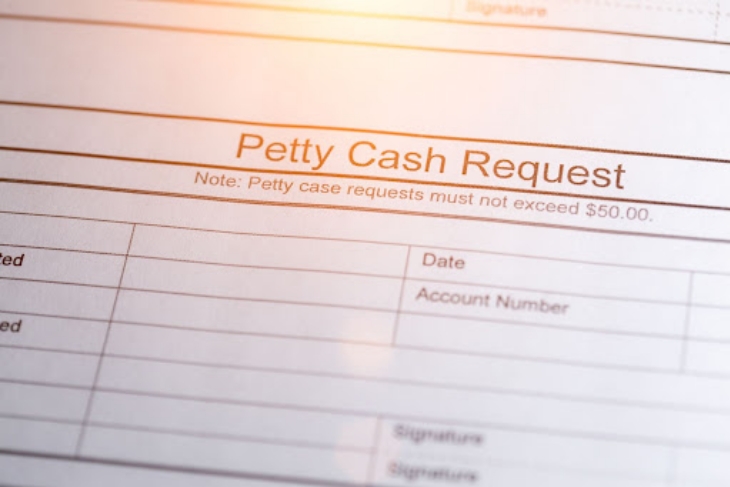
To avoid these scenarios, the petty cash box should include a log that you record all disbursements, along with the name of the person who received the funds, the total amount disbursed, the purpose for which the funds will be used, the date of the disbursement, and so on. By following a voucher system strictly, companies can ensure that money doesn’t simply “go missing” from petty cash.
3. Employ Strict Access Control
Needless to say, you should secure petty cash against theft. Many organizations keep it in a simple lockbox, and store it in a more secure location when the office is closed. Effective access control goes a bit further than that, however. Ideally, a single employee should act as the sole custodian of the cash. This person should be responsible for recording all disbursement, counting and recording all returned amounts, and ensuring that oncoming documentation (that is, receipts) substantiates the claimed expenditures.
This is one of those situations where the old adage applies: “when everyone is responsible then no one is responsible.” By putting one person in charge of the cash and its associated record-keeping, you can avoid many of the problems associated with petty cash processes.
4. Reconcile on a Regular Schedule
If errors or omissions do occur (and they inevitably will), frequent reconciliation can ensure that you resolve problems quickly, when people’s memories are still somewhat fresh. This also ensures that feedback can be provided promptly whenever information is incomplete or employees are not following processes properly.
Reconciling accounts can often be a challenge, especially when information is incomplete or when finance personnel must deal with a large number of transactions. If your organization is interested in streamlining and automating cash reconciliation and other end-of-the-month financial closing processes, insightsoftware can help. Longview is our flagship financial consolidation and closing solution; it brings speed and agility to period-end closings. We also offer a complete line of reporting, planning and budgeting, and analytics solutions. To learn more, contact us today for a free demo.

Top Three Ways to Improve Cash Flow Visibility
Watch Now