Agility PIM
What Is PIM/PXM?
Managing product information across various channels can be complex and error-prone, leading to inconsistencies and inefficiencies. Product Information Management (PIM) is how enterprises transition from archaic, disconnected, manual processes to a global, go-anywhere commerce strategy that connects people to products. PIM systems centralize and organize your product data, ensuring it’s accurate and consistent. Product Experience Management (PXM) enhances this by tailoring the product experience to better meet customer expectations.
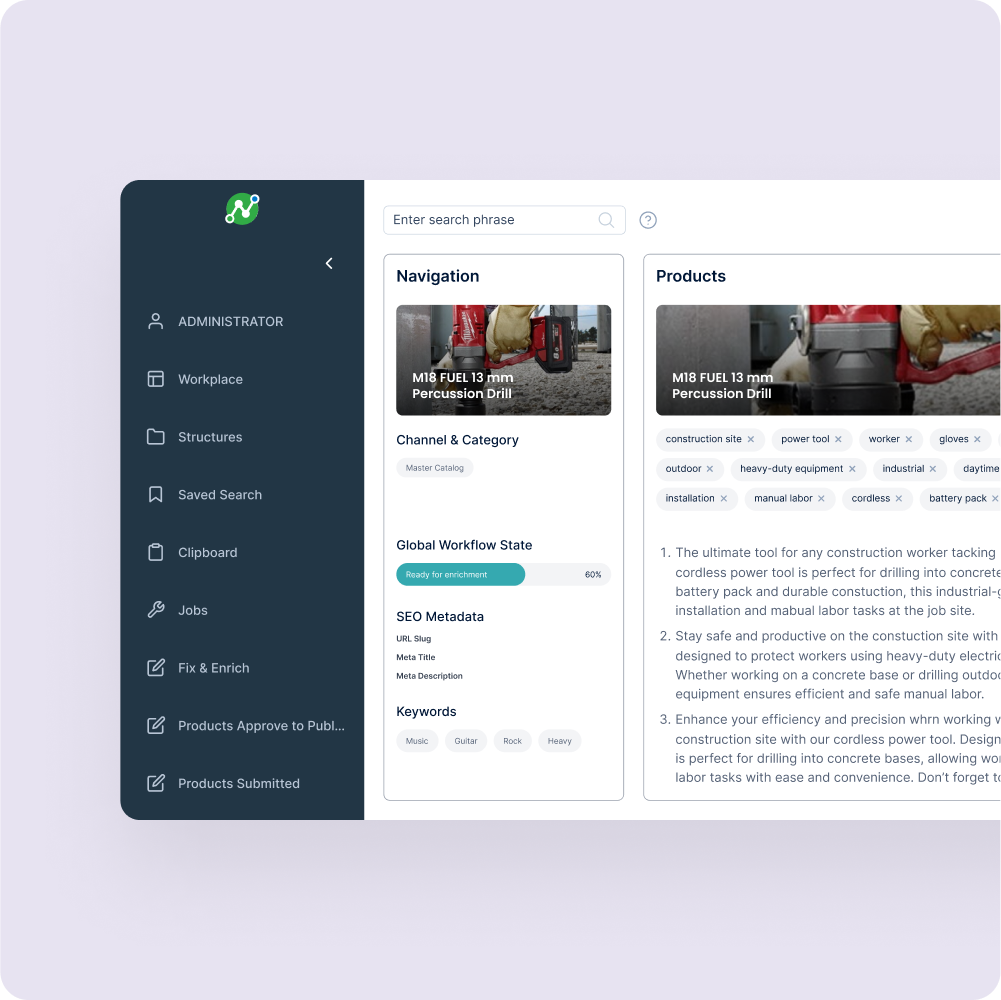
Agility® PIM leverages AI to improve both PIM and PXM, automating data enrichment and streamlining distribution across all platforms. This results in faster, more reliable product updates and a cohesive customer experience.





What Does PIM Software Do?
You may not think you know what Product Information Management PIM software is, or what it does. But as a consumer, you’re already familiar with what a PIM solution delivers:
- If you’ve entered a few product criteria into a search engine and been presented with relevant results, that’s the kind of SEO and findability PIM software delivers.
- If you’ve seen a product’s specifications online, in a brochure, and on the packaging, and they’re all correct and the same, that’s the kind of consistency PIM software delivers.
- If you’ve made an online purchase with confidence because you’ve been able to review features and benefits, see photos or a video, and been offered needed accessories at checkout, that’s the kind of compelling content PIM software can deliver.
- If you’re received a flyer with a product selection tailored to your interests, that’s the kind of targeting PIM software can deliver.
From the customer perspective, Product Information Management is the foundation of a buying experience that simplifies product selection, removes doubt, and ensures satisfaction.
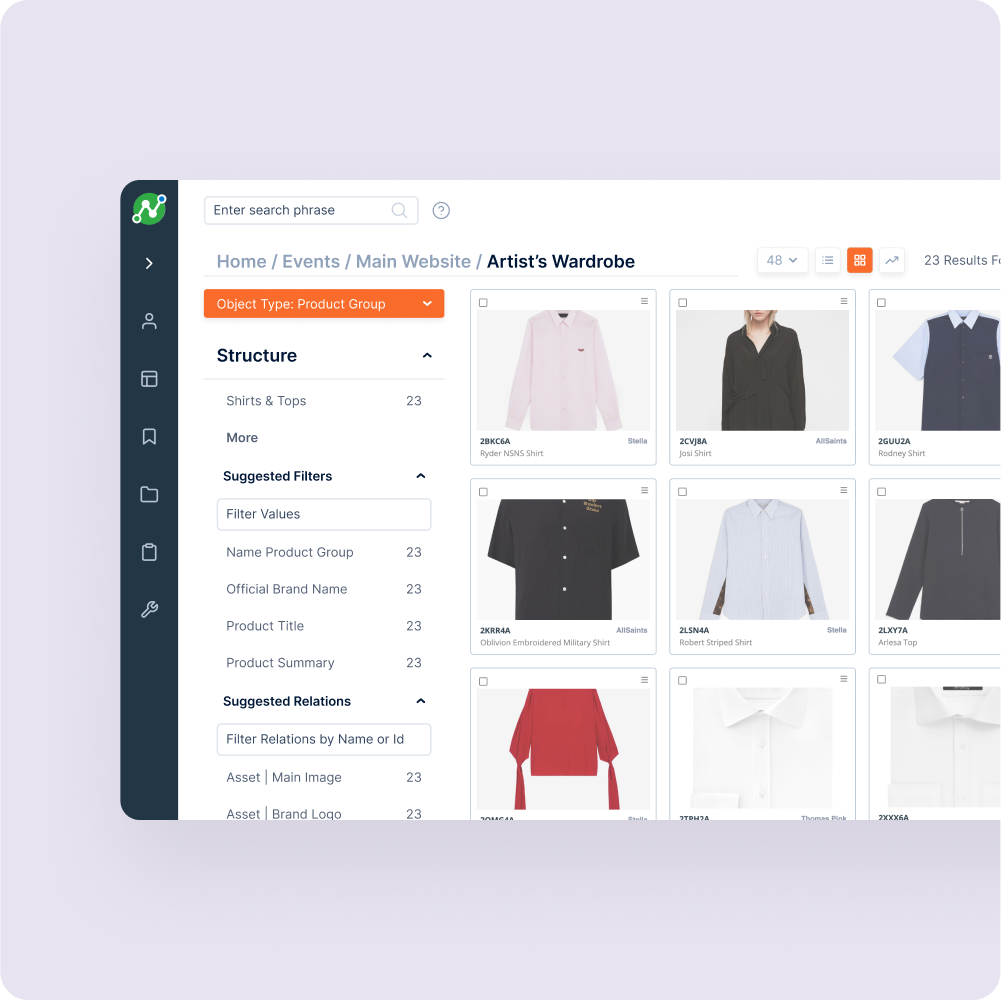
Transform How You Manage and Deliver Product Data
For businesses, Product Information Management allows you to efficiently collect, organize, enrich, syndicate, translate, localize and target product information, so that it’s globally available in any channel. As PIM transforms internal processes, stakeholders throughout the organization reap the benefits:

Sales Teams
A single ‘source of truth” puts current, correct and complete product information at their fingertips

Product Managers
Onboarding new products from suppliers and data providers is streamlined to reduce time to market

E-commerce Managers
Optimized content improves product findability for better user experience, higher conversion rates, and less cart abandonment

Marketing Teams
Content created for distinct customer audiences can be syndicated across multiple channels in targeted campaigns

Content Teams
The brand image is protected when product descriptions, images, and related content are validated, and quality controlled prior to release to the public
Are You Ready for PIM?
Our 3-minute PIM Readiness Assessment can show you the potential value a PIM solution can bring to your company.
How Does a PIM Solution Work?
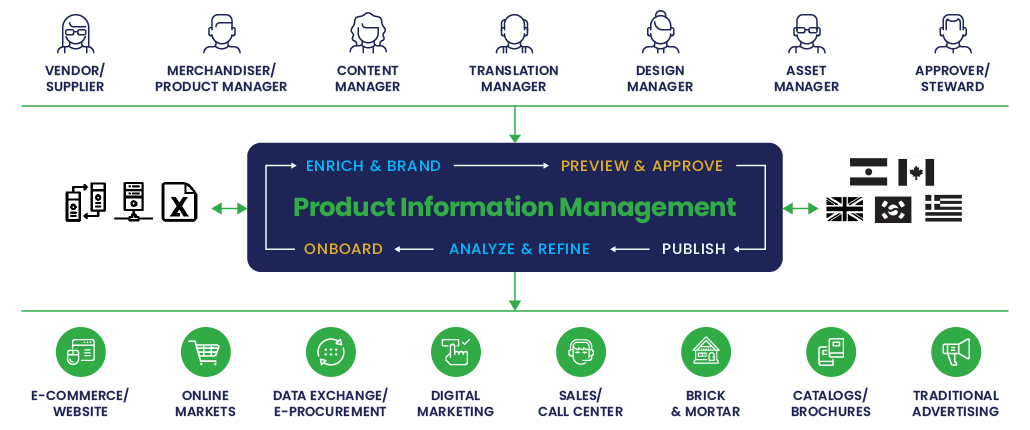
Product Information Management software creates a single, centralized product information repository that all relevant stakeholders and departments in an enterprise have access to, appropriate to their role. Product information authoring, onboarding, enrichment, quality control, approval and syndication all happens through one application, configured to the needs of the user, and designed to foster easy collaboration and improved productivity.
Implementing a PIM provides an enterprise with the platform, tools, and processes to:
- Build out granular, searchable attributes for rich, accurate, relevant product data
- Define relationships for up-sells, cross-sells and product assortments
- Promote products across multiple touchpoints: websites, print catalogs, brochures, marketplaces, data exchanges, stores, sales teams
- Unify processes and workflows for integrating, managing and approving content
- Implement strict data quality and governance policies
- Adapt product content to multiple languages and geographies
- Consolidate Business Intelligence on products from multiple sources
What Types of Product Information Does PIM Manage?
A PIM system allows you to expand your product data assets beyond simple Product Master Data to empower the customer throughout their buying journey with rich product content, digital assets, and value-added information. Within a PIM you can directly manage:

Basic Product Data
Names, Titles, SKUs, UPCs, EANs, ASINs, Short Descriptions, List Price

Taxonomies and Relationships
Categories, Facets, Product Variants, Accessories, Related Products, Cross-Sells, Up-Sells

Product Resources
Care Instructions, Installation Instructions, User Guides, Certificates, Technical Documents, FAQs, Warranties, MSDS

Marketing Content
Long Descriptions, Features & Benefits, Product Comparisons, Bundles & Kits

Technical Specifications
Dimensions & Weight, Materials, Ingredients, Packaging

Digital Assets
Photos, Videos, Logos, Labels

Marketing Resources
Sales Documents, Marketplace Templates, SEO Data

Localized Information
Translations, Local Currency, Culturally-Relevant Images
By providing a 360⁰ view of your products, PIM elevates product data into an asset and a strategic benefit for your business.
In addition, data assets generated along the customer journey allow businesses to understand how products are performing and to gain insights that improve marketing effectiveness and customer experiences. Businesses can connect external data/systems to PIM and its business intelligence tools for a more complete view of products, such as:
-
Likes/Shares/Posts
-
Returns
-
Service Inquiries
-
Ratings
-
Reviews
-
Page Views
-
Page Rankings
-
Conversion Rates
-
Bounce Rates
-
Sales Performance
-
Price Sensitivity
PxM is what PIM makes possible
Product experience management (PxM) is a new term for creating a shopping interaction that leverages all the PIM tools to satisfy the customer. With complete and consistent product content as the baseline, PxM raises the bar to include findability, context, and personalization as necessary elements to tailor the buyer’s experience, and richer content experiences like video, augmented reality or 3D imagery to enable an informed choice. Learn more about Product experience management (PxM) with Agility PIM.
What Types of Companies Use PIM?
PIM software solves big problems for companies at every point in the product supply chain. For example:

For Manufacturers
For manufacturers, taking a new product to market with incomplete data leads to lower conversion rates and ultimately affects revenue and margin. A PIM solution eliminates data silos and quickly improves the level of enrichment and completeness of product data, so it is buyer-ready at launch.

For Distributors
For distributors, onboarding and normalizing product data from suppliers and subscription data services is often a tedious, manual process. A PIM solution allows distributors to offer more SKUs more efficiently and prioritize products to earn more revenue.

For Retail
For retailers, today’s shoppers expect an exceptional experience, with exceptional product data, across all customer touch points. A PIM solution allows retailers to configure and feed product information from the data repository to a website, mobile-friendly platform, print or electronic catalog, in-store kiosk and many other channels.
How Does PIM Future-Proof My Business?
Implementing Product Information Management software positions an enterprise for emerging imperatives in commerce, like:
- The Print Revival – Seven considerations for rethinking print in your marketing mix
- Omnichannel Marketing – How PIM helps marketers win in the omnichannel era
- Personalized Shopping – How personalization help retailers and brands deliver a seamless shopping experience
- Artificial Intelligence – AI tools can enrich your assets with metadata for powerful searching capability


