
Scenario Planning Software


Navigate Financial Uncertainty With Confidence
What-if Analysis – Don't just react to change, anticipate it. Explore the impact of different decisions and market fluctuations with ease.
Advanced Modeling – Go beyond basic forecasting with powerful modeling features to identify key factors impacting your financial performance.
Automation – Automate repetitive processes to save valuable time and streamline data collection and updates with real-time integrations.


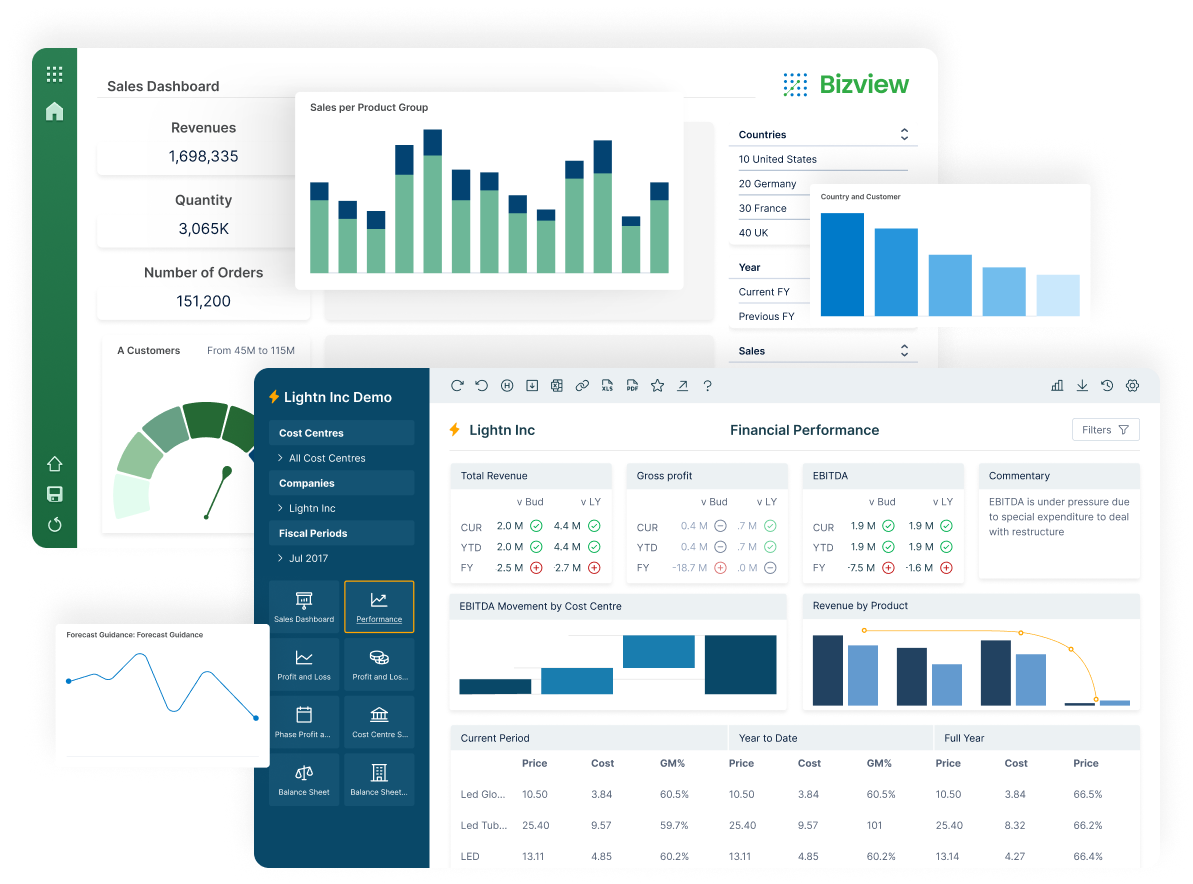
We connect to 200+ ERPs/EPMs









Tools for Scenario Planning
See What Scenario Planning Software Works for Your ERP
Frustrated by Static, Inaccurate Forecasts?Adopt Dynamic Scenario Planning

Limited Visibility Into Future Risks
Unforeseen events can disrupt your best-laid plans. Scenario planning helps you identify potential risks lurking around the corner. Model different market fluctuations or economic downturns to assess their impact and develop contingency plans. JustPerform is built around scenario-centric and process-first EPM architecture, so finance teams can define multiple scenarios and model outcomes before they happen.

Lack of Planning Agility
Businesses need to be agile and adjust their strategies in response to changing market dynamics. Scenario planning helps you prepare for various eventualities, making it easier to adapt to unforeseen circumstances and capitalize on new opportunities. Longview automates consolidation, close, and reporting to reduce lag between data generation and analysis, improving financial cycles and overall planning agility.

Inaccurate, Static Forecasting
Static forecasts often fail to account for unexpected events or market shifts. Scenario planning allows you to model a range of possibilities, leading to more accurate and adaptable forecasts that inform better decision-making and better outcomes. Bizview’s driver-based planning, what-if, bottom-up, and top-down modeling capabilities (plus its continuous planning) enable flexible and nuanced forecasts.
Financial Scenario Planning Use Cases
Plan to Avoid Risks & Make Better Decisions
Uncover Hidden Risks & Safeguard Your Financial Future
Don't let unforeseen events derail your financial progress. Scenario planning empowers you to proactively manage risk. By simulating various future scenarios, you can uncover hidden vulnerabilities in your plans. Model potential market downturns, competitor actions, or economic disruptions to assess their impact on your business. This foresight allows you to develop contingency plans and mitigation strategies, safeguarding your financial future and ensuring your organization remains resilient in the face of uncertainty.
30%
Better forecasting accuracy
15%
Increase in profitability
2x
More likely to quickly adapt plans
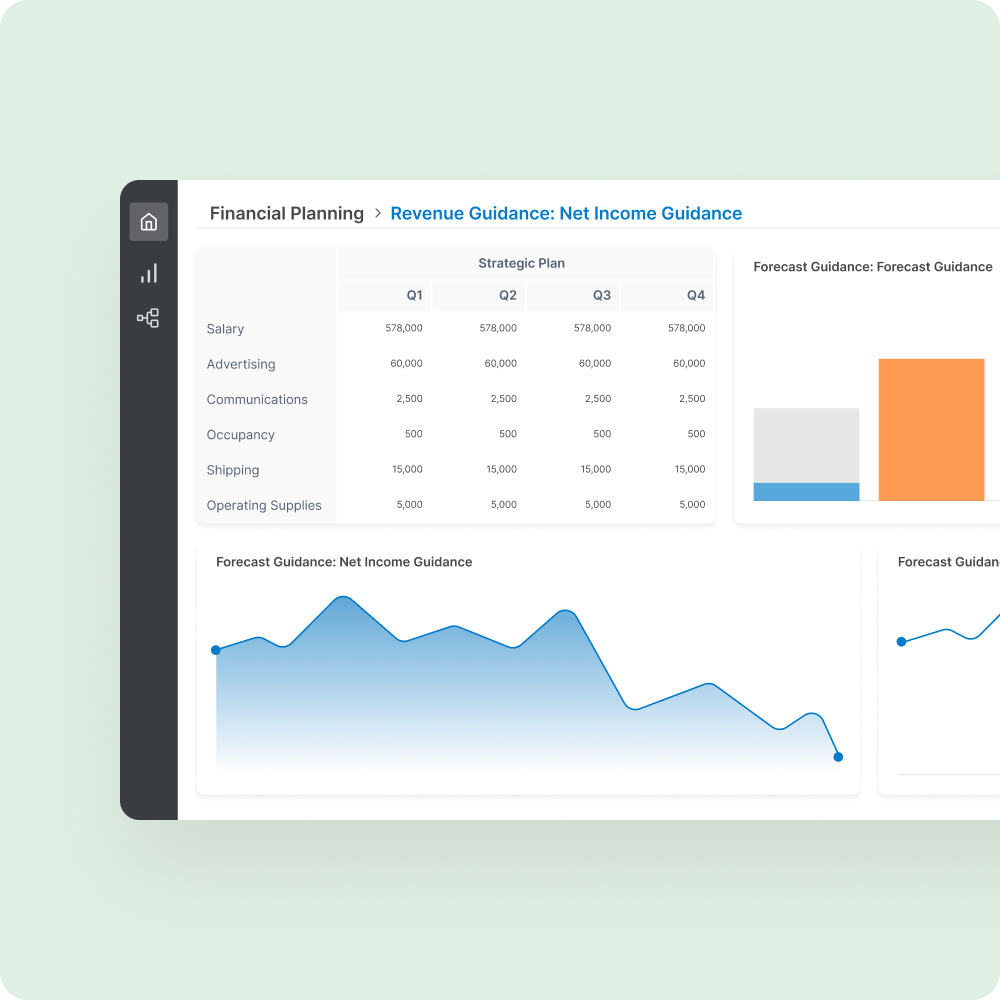
Chart Your Course to Success With Strategic Planning
Static forecasts and rigid plans can leave you vulnerable. Scenario planning equips you with the foresight to navigate uncertainty and chart a course for success. By exploring a range of potential outcomes, you can identify potential roadblocks and opportunities before they materialize. This proactive approach allows you to make informed strategic decisions, optimize resource allocation, and build resilience into your plans. With scenario planning, you’re not just reacting to change – you’re anticipating it to shape a better business future.
30%
Better forecasting accuracy
15%
Increase in profitability
2x
More likely to quickly adapt plans
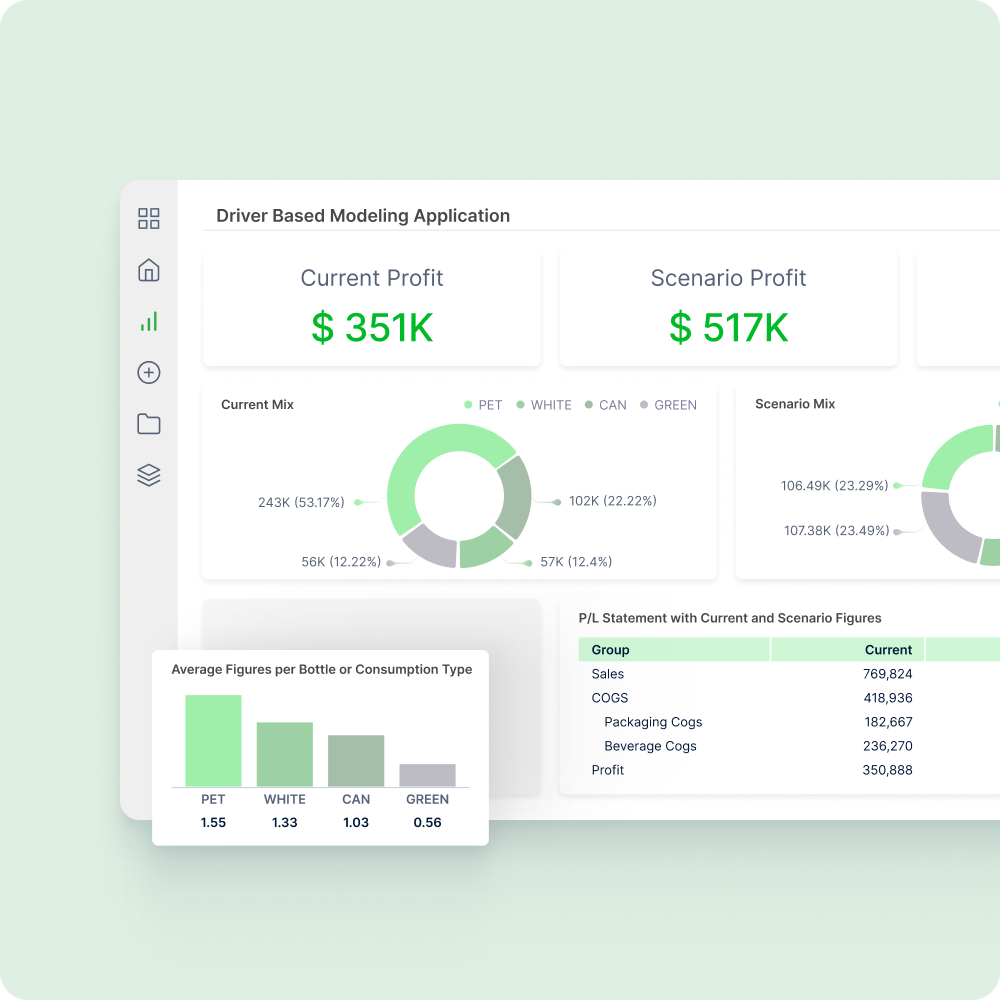
Empower Decisions With a Single Source of Truth
Scenario planning loses its effectiveness when fueled by scattered, inconsistent information. insightsoftware solutions deliver a centralized, consolidated database delivering a single source of truth for your data. By consolidating data from all your financial systems into a central repository, you eliminate data silos and inconsistencies. This unified data foundation guarantees the accuracy of your financial models, empowers you to explore scenarios with confidence, and ultimately leads to data-driven decisions that propel your business forward.
30%
Better forecasting accuracy
15%
Increase in profitability
2x
More likely to quickly adapt plans
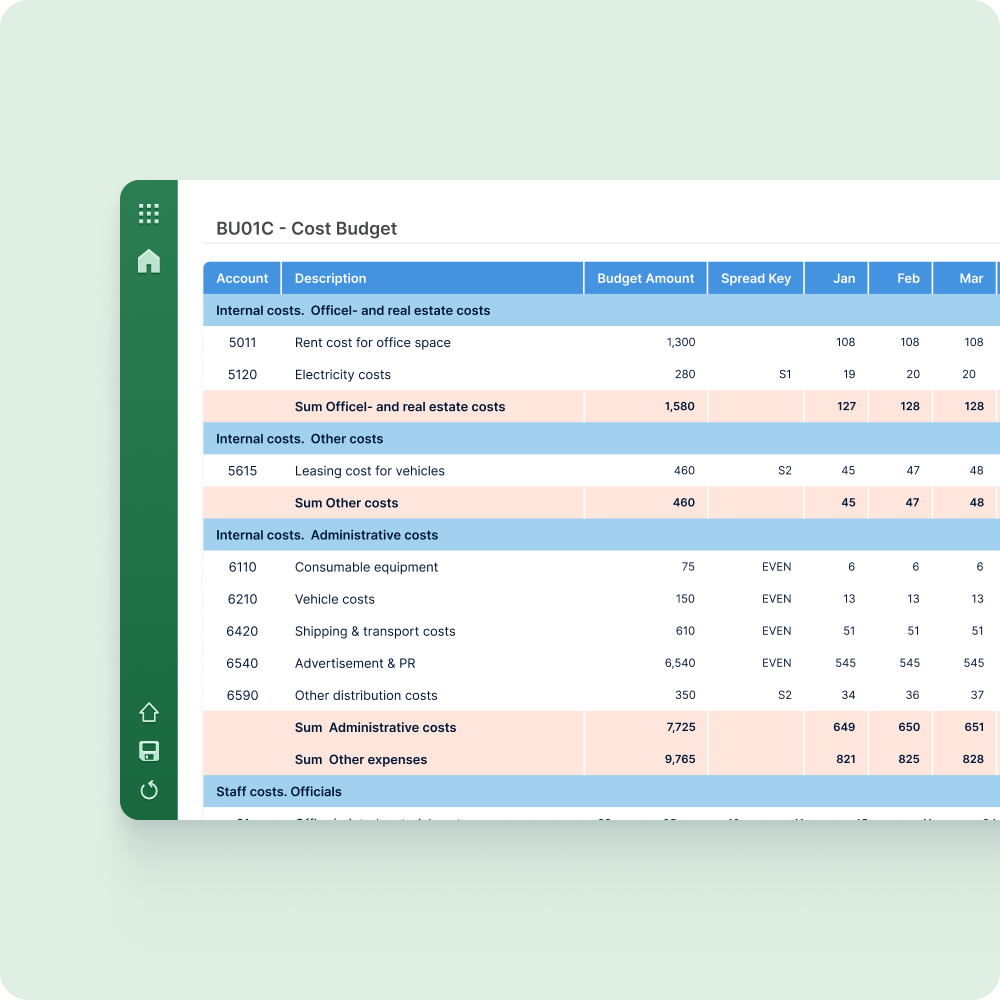
Scenario Modeling in Financial Analysis
Business agility and responsiveness are top of mind for the C-suite today. Business leaders who plan proactively for a wide range of possibilities will be better prepared to respond when unexpected events occur or when things do not pan out as predicted.

Scenario Planning Software FAQs
What sets insightsoftware apart from other financial scenario planning tools?
What are some key capabilities to look for in a scenario planning tool?
- Flexibility: A good scenario planning tool should be flexible enough to accommodate different types of scenarios, from the most likely to the most extreme, and allow users to modify key assumptions and variables as needed.
- Visualization: The ability to visualize different scenarios is crucial to understanding their potential impact. Look for tools that offer data visualization and graphical representations of the different scenarios.
- Collaboration: Scenario planning is often a team effort, so the tool should enable collaboration and sharing of information among team members, including the ability to leave comments and annotations.
- Data integration: A scenario planning tool should be able to integrate with a variety of data sources, including internal data sets, external data sources, and third-party data providers.
- Scenario testing: A good scenario planning tool should enable users to test different scenarios in real time, allowing them to see how changes in assumptions or variables affect the outcome.
- Reporting: The ability to generate reports and share findings with stakeholders is an important capability to have in a scenario planning tool. Look for tools that offer customizable reports and easy sharing options.
- Ease of use: The tool should be easy to use and intuitive, with a user-friendly interface that requires minimal training.
- Scalability: Finally, the tool should be scalable to accommodate the needs of different organizations, from small businesses to large corporations, and offer flexible pricing options to suit different budgets.
What is scenario planning?
How does scenario planning differ vs. forecasting?
Why is scenario planning important?
What are the benefits of scenario planning?
- Improved risk management and resilience
- More strategic decision-making and long-term positioning
- Better flexibility and adaptability to changing market conditions
- Greater stakeholder alignment and confidence
- Enhanced innovation and strategic thinking
What are the advantages of dynamic scenario planning with AI?
- Speed and scalability
- Ability to model complex, multi-variable “what-ifs”
- Continuous recalibration and responsiveness
- Deeper data-driven insights and prescriptive guidance
- Cross-functional alignment and collaboration
- Empowerment to be more strategic rather than focused on maintenance
What business problems can you solve with scenario planning?
- Market Disruptions: Scenario planning can help businesses anticipate potential market disruptions, such as changes in consumer behavior, technological advancements, or economic downturns. By developing multiple scenarios, businesses can prepare contingency plans and identify opportunities to adapt or pivot their strategies.
- Supply Chain Disruptions: By mapping out different scenarios, businesses can identify potential risks and develop strategies to mitigate them. This may involve diversifying suppliers, building redundancies into the supply chain, or developing alternative sourcing strategies.
- Strategic Planning: Scenario planning can be used to inform strategic planning by exploring alternative futures and their potential impacts on the business. This can help businesses identify new opportunities, risks, and challenges, and make more informed decisions about where to invest resources.
- Risk Management: Scenario planning can also be used as a risk management tool, by identifying potential risks and developing contingency plans to address them. This may involve developing response plans for natural disasters, cyber-attacks, or other crises.
What are the top challenges of scenario planning?
- Uncertainty: One of the biggest challenges of scenario planning is dealing with uncertainty. The future is inherently unpredictable, and it can be challenging to anticipate all the possible outcomes of different scenarios.
- Complexity: Scenario planning requires a significant amount of time and resources to gather and analyze data and develop scenarios that are both credible and coherent. The complexity of the process can be a significant challenge for organizations.
- Overconfidence: Scenario planning can sometimes lead to overconfidence. Organizations may become overly reliant on their scenarios, believing that they have covered all possible outcomes, which can lead to complacency and a lack of preparedness for unexpected events.
- Bias: Scenario planning can be influenced by cognitive biases, such as groupthink or confirmation bias, which can lead to flawed or incomplete scenarios.